Walking Stick Project for People with Visual Impairments
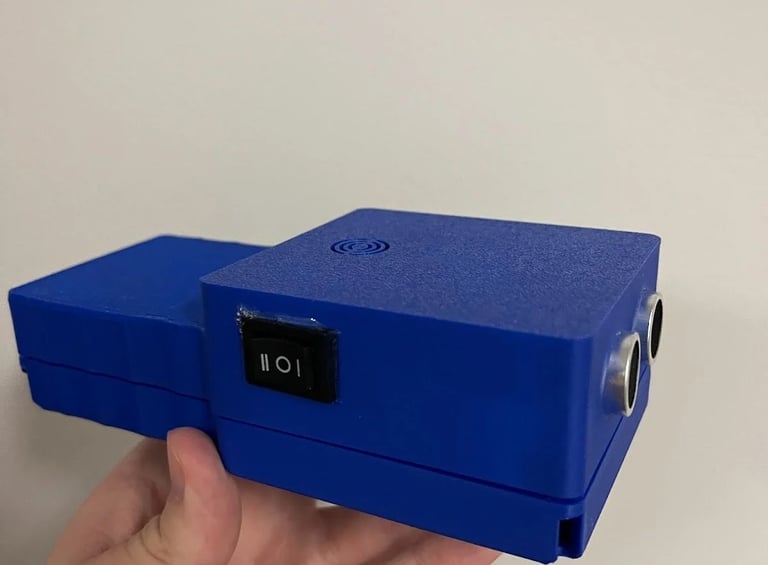
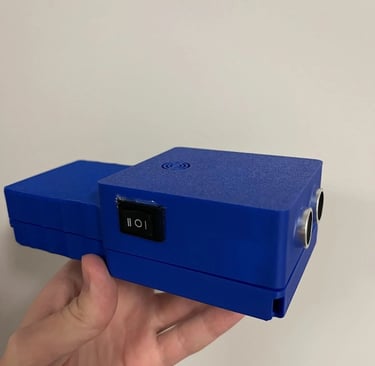
The goal of this project was to create a device with a sensor that could be calibrated to perform uncertainty calculations for a final project in the class Principles of Measurement and Instrumentation. My group and I decided to make a replacement for a walking stick with an ultrasonic sensor.
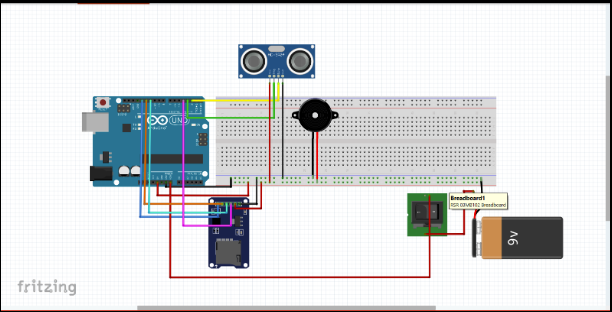
The Walking Stick device uses an Arduino to measure the distance from a sensor to the nearest object the sensor is pointed at, which then activates a buzzer to make a beeping noise, which gets more frequent as the distance decreases. The goal is to help those with sight disabilities more easily navigate rooms, as the Walking Stick can make sure they know where any walls or obstacles may be. The major electronics used in the walking stick are an Arduino Uno, which houses the code that the device runs on, an ultrasonic sensor that is compatible with the Arduino sensor and measures distance, a buzzer that can vary in frequency due to the code, an SD card reader to store data on the distance the device has recorded, a 9-volt battery, and a three prong power switch to control the power of the device.
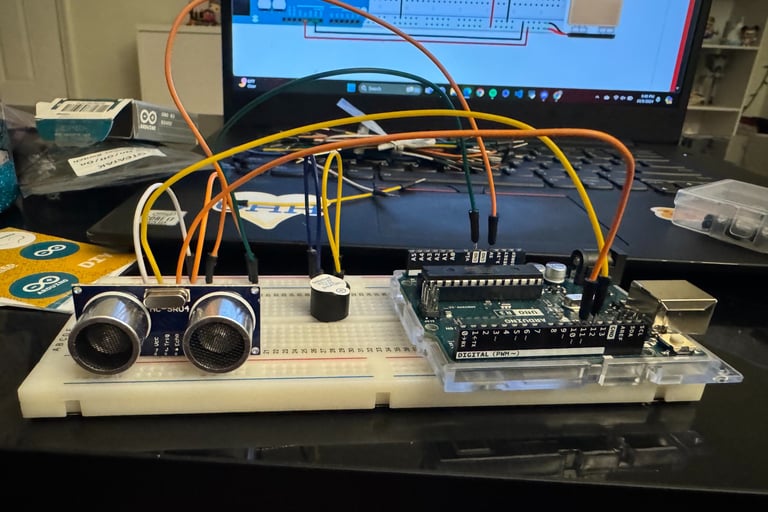
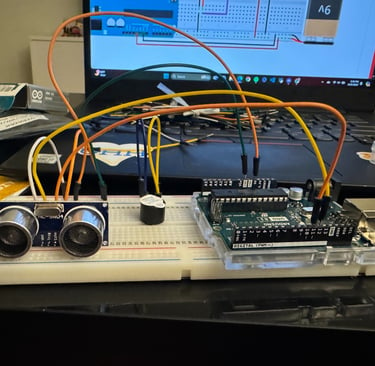
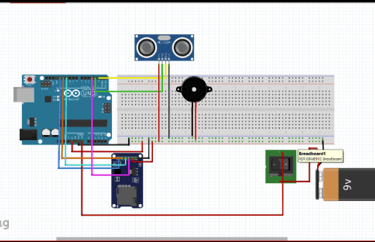
For this project, I started with performing trade studies on electronic devices. The Arduino Uno was a requirement for the class. The HC-SR04 Ultrasonic Sensor, Adafruit 5V buzzer, MicroSD card breakout board+, and QTEATAK On/Off/On Boat Toggle Rocker Switch were chosen for this project. I then created a fritzing diagram of the electronics before soldering each component to the protoboard.
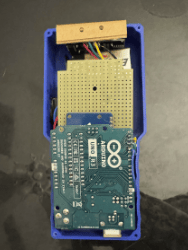
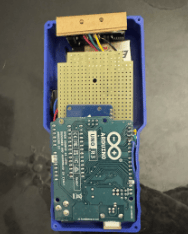
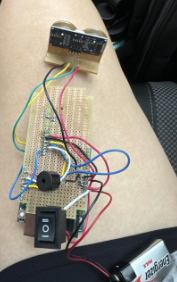
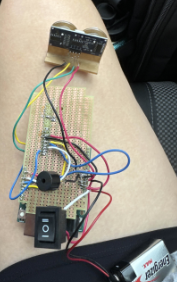
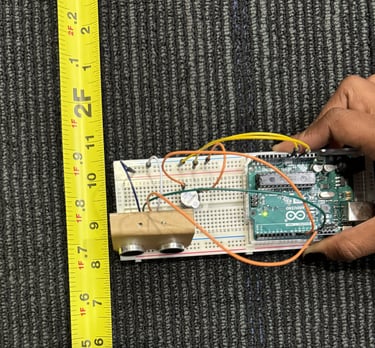
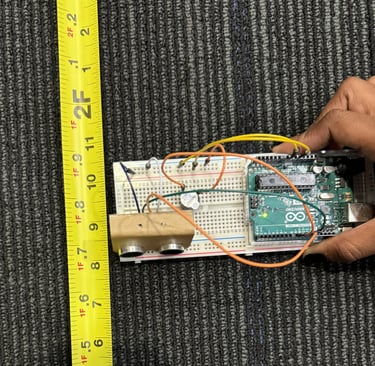
The ultrasonic sensor was then tested to perform uncertainty analysis using a calibrated tape measure. Data was collected from the sensor at certain distance intervals to then calculate the uncertainty. The total uncertainty of the ultrasonic sensor was calculated to be 16.31%.
© 2025. All rights reserved.